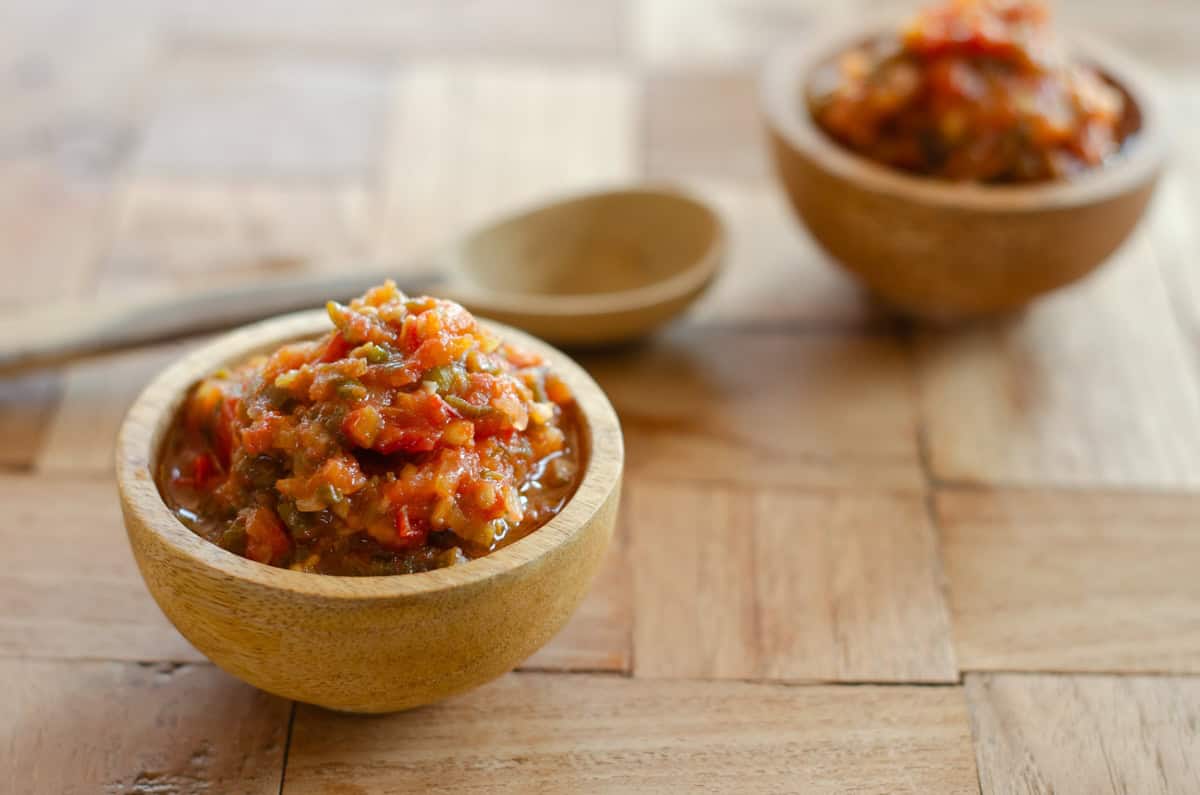
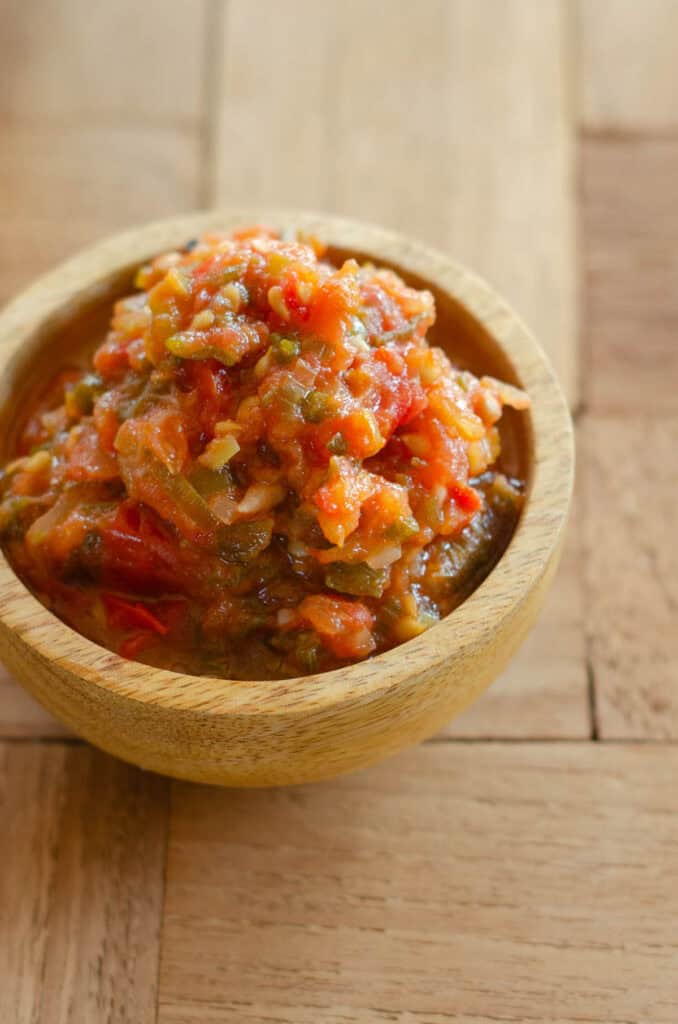
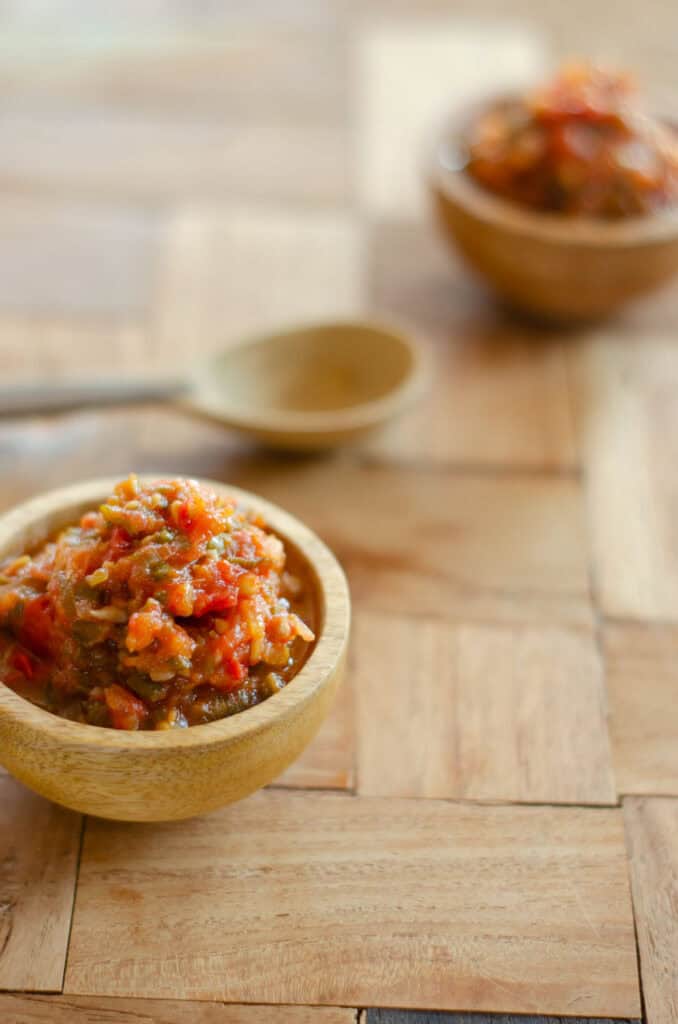
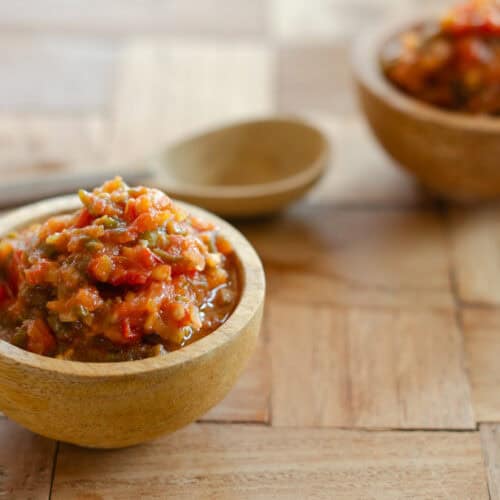
Make this authentic Colombian hogao, a traditional tomato and scallion sauce that serves as the base for a wide variety of typical dishes. Seasoned to perfection with garlic and cumin, it is an incredibly easy recipe to make and packed with flavor.
“If there is a mother of Colombian flavor, it is hogao or guiso criollo,” as described in this article by the newspaper El Tiempo. And for good reason. Hogao —also known in different regions of the country as guiso, ahogao, or salsa criolla— is the most important traditional sauce in Colombia.
It is an incredibly versatile sauce, easy to prepare, and packed with an amazing flavor that transforms any dish. You can use it in two main ways:
As a flavor base: It is the essential starting point to bring soul to dishes like beans, lentils, and various types of rice.
As a topping or side: It is the perfect final touch to spoon over crispy patacones, arepas, boiled potatoes, or fried yuca.
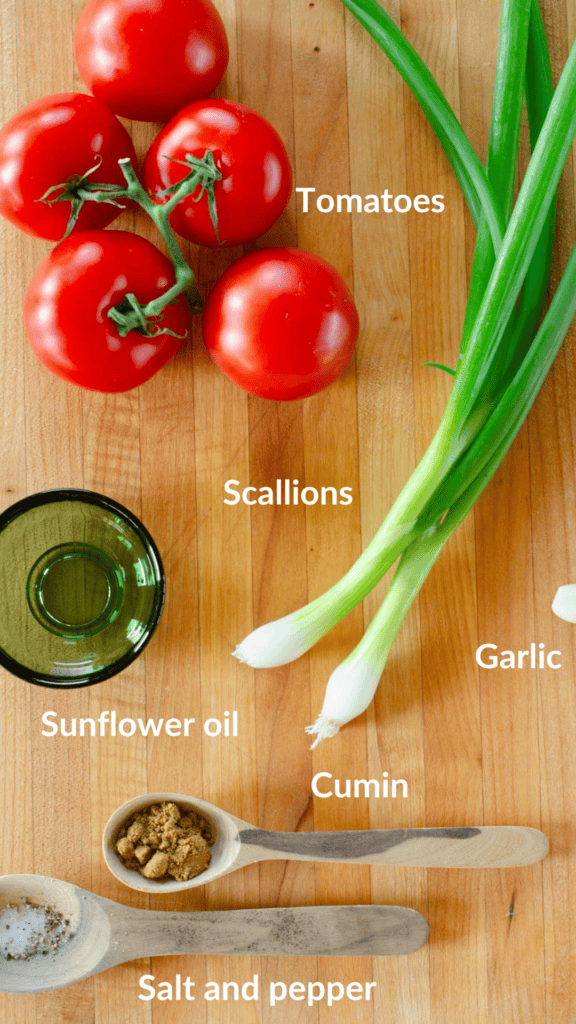
Ingredients
The magic of this sauce lies in its simplicity.
To achieve that traditional flavor, make sure to use ripe tomatoes (the trick is to grate them) and scallions, the non-negotiable ingredient that gives it an authentic touch.
How to prepare Hogao
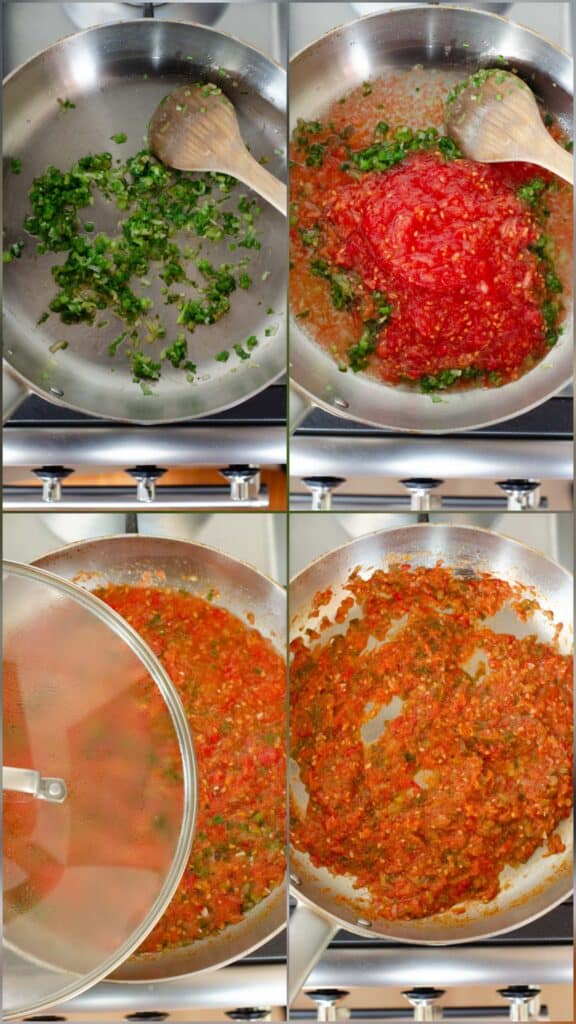
Step 1: Heat the oil in a pan, then sauté the scallions and garlic over low heat for 5 minutes, until soft. Add the cumin and cook for 1 more minute.
Step 2: Add the grated tomatoes to the pan and stir well to combine all the flavors.
Step 3: Cover the pan and let it simmer over low heat for 15 minutes so the flavors can fully concentrate.
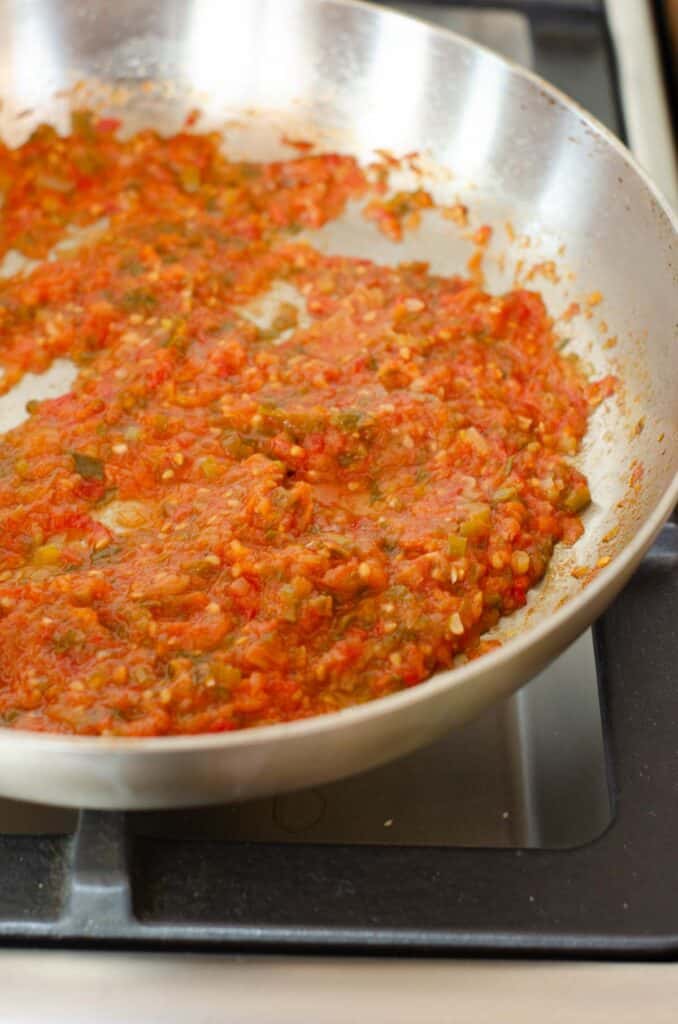
Step 4: Remove the lid and cook for another 5 to 10 minutes. This will allow the hogao to thicken naturally and take on a deeper red color.
How to Serve and Store Hogao
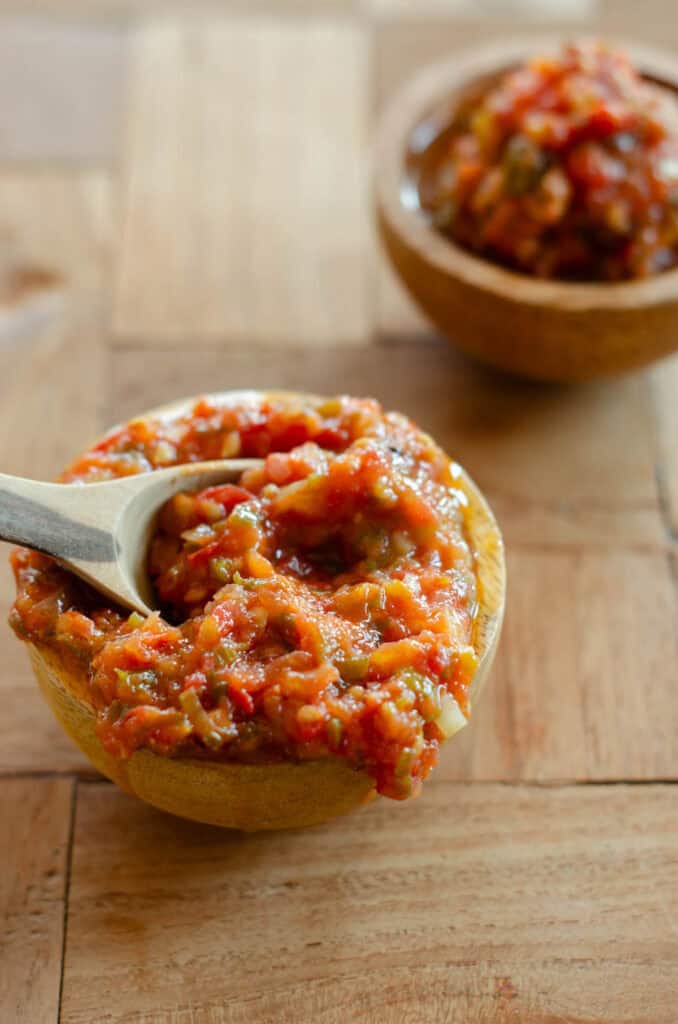
Your homemade hogao is ready to shine! Serve it warm with the dish of your choice: it tastes amazing over crispy patacones, mixed into rice, or as the perfect finishing touch to your beans.
Tip: Try mixing some hogao into your scrambled eggs! It is a delicious and very traditional combination for breakfast.
Have some leftovers? No problem! Store the remaining hogao in an airtight container in the fridge for up to three days. That way, you’ll have this incredible touch of Colombian flavor right at hand for your next meal.
Do you love this recipe? Give it a 5-star rating below and leave me a comment! Or tag @vecinavegetariana on Instagram. You can also pin this recipe now and make it later!
Hogao (Tomato Onion Sauce)
Prepare an authentic Colombian hogao made with tomatoes and scallions using this traditional recipe. It is the perfect condiment—easy and packed with flavor—to accompany your favorite typical dishes.
Add the oil to the pan and cook the scallions and garlic over low heat for 5 minutes or until soft. Be careful not to let them brown
Add the cumin and cook for 1 minute. Then, stir in the grated tomatoes, salt, and pepper, and let it simmer covered over low heat for 15 minutes so the flavors can concentrate
Cook the hogao uncovered for another 5 to 10 minutes until it thickens and takes on a deeper red color. At the end, taste it and adjust the salt if necessary
Serve with the dish of your choice. Store any leftover hogao in an airtight container in the fridge
Do you love this recipe?Give it a 5-star rating and leave me a comment! Or tag @vecinavegetariana on Instagram. You can also pin this recipe now and make it later!
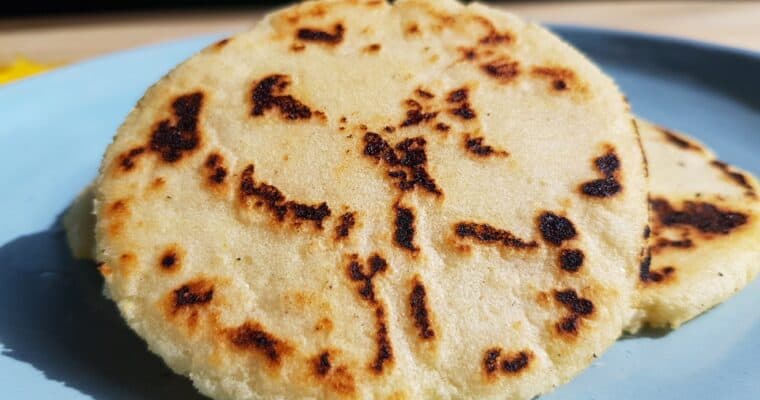
There is not a single food as Colombian as the arepa. Period. Arepas are round corn cakes and are generally eaten for breakfast, as a side to the main dish, or as a snack. Yes, that’s right: arepas you can eat all day every day. […]
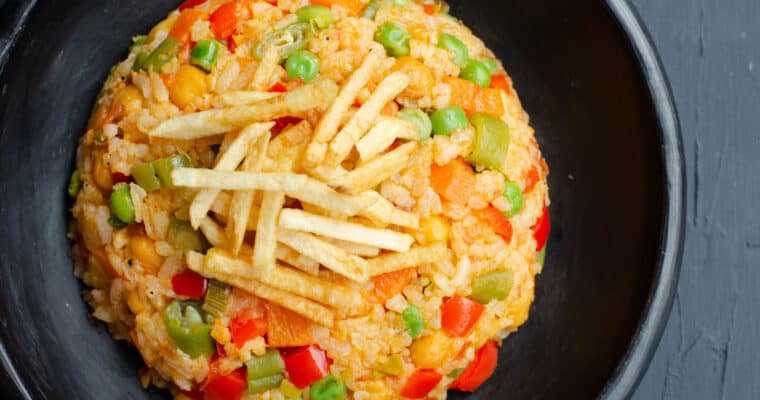
This recipe for Colombian Rice with Vegetables is inspired by the world-famous dish Arroz con Pollo (rice with chicken). But then, of course, without the chicken (arroz sin pollo, so to speak). It is packed with vegetables and legumes to make a comforting and healthy […]
This is a good recipe with some great tips, the grated plantain is a game changer for my beans. Thanks so much for that!
I think you need to be careful a bit with the ratios and times though if you follow the recipe exactly. Depending on the pot, covering the beans with 2″ (5cm) of water is a lot of water. I had to add the other half of my plantain to get it to thicken enough because there was so much water. Also, 1 hour cook time in a pressure cooker is way too long, you’re going to end up with bean paste. I had a gut feeling about this one and reduced my cook time to 35 minutes and my beans came out wonderfully. Granted, I was using an Instant Pot, so there may be some time difference if you’re using a traditional pressure cooker. BUT, it’s worth considering that 1 hour is the generally accepted pressure cooker time for UNsoaked beans. This recipe calls for soaked beans, so the cook time should be significantly less than 1 hour.
Thank you for trying out the recipe! Great to hear the addition of plantain was a success. The ratios and times depend on many things, therefore it is indeed wise to check and try. Here I do need 55-60 mins in the pressure cooker, because of the type of bean (really different and harder than the ones I personally have experience with in Europe), and the fact that I live at a high altitude (in Bogotá). But this feedback is really helpful, I will incorporate it in the instructions to make it more US/EU proof! Thank you again 🙂
Oh no, I meant to post this on the bean recipe, not the hogao! The hogao was delicious.
Interesting that there’s such a huge difference in cook times with beans, beans are crazy! I’m using pintos and I’m at 5,500 ft in New Mexico. Thanks again for the recipe, my beans I had for lunch today were even tastier than they were last night when I had them for dinner.
Glad you liked the hogao! I was also thinking that the instruction is a bit open to interpretation, because I mean 1 h from the moment I turn on the stove, and 30/35 minutes from the moment it starts releasing pressure. So your feedback has been helpful, I changed the instructions to make them more clear. Fantastic that they tasted even better for lunch! I like them mixed with rice for breakfast as well 🙂
As a foreigner I fell in love with Colombian food. For me it only had one problem: many dishes are heavy on animal protein. Being a vegetarian crazy about food and cooking, my mission and interest became making Colombian food, with local ingredients, vegetarian friendly.
At Vecina Vegetariana you find vegetarian recipes inspired by Colombian cuisine.
We use cookies on our website to give you the most relevant experience by remembering your preferences and repeat visits. By clicking “Accept”, you consent to the use of ALL the cookies.
This website uses cookies to improve your experience while you navigate through the website. Out of these, the cookies that are categorized as necessary are stored on your browser as they are essential for the working of basic functionalities of the website. We also use third-party cookies that help us analyze and understand how you use this website. These cookies will be stored in your browser only with your consent. You also have the option to opt-out of these cookies. But opting out of some of these cookies may affect your browsing experience.
Necessary cookies are absolutely essential for the website to function properly. These cookies ensure basic functionalities and security features of the website, anonymously.
Cookie
Duration
Description
cookielawinfo-checkbox-analytics
11 months
This cookie is set by GDPR Cookie Consent plugin. The cookie is used to store the user consent for the cookies in the category "Analytics".
cookielawinfo-checkbox-functional
11 months
The cookie is set by GDPR cookie consent to record the user consent for the cookies in the category "Functional".
cookielawinfo-checkbox-necessary
11 months
This cookie is set by GDPR Cookie Consent plugin. The cookies is used to store the user consent for the cookies in the category "Necessary".
cookielawinfo-checkbox-others
11 months
This cookie is set by GDPR Cookie Consent plugin. The cookie is used to store the user consent for the cookies in the category "Other.
cookielawinfo-checkbox-performance
11 months
This cookie is set by GDPR Cookie Consent plugin. The cookie is used to store the user consent for the cookies in the category "Performance".
viewed_cookie_policy
11 months
The cookie is set by the GDPR Cookie Consent plugin and is used to store whether or not user has consented to the use of cookies. It does not store any personal data.
Functional cookies help to perform certain functionalities like sharing the content of the website on social media platforms, collect feedbacks, and other third-party features.
Performance cookies are used to understand and analyze the key performance indexes of the website which helps in delivering a better user experience for the visitors.
Analytical cookies are used to understand how visitors interact with the website. These cookies help provide information on metrics the number of visitors, bounce rate, traffic source, etc.
Advertisement cookies are used to provide visitors with relevant ads and marketing campaigns. These cookies track visitors across websites and collect information to provide customized ads.


This is a nice sauce that combines easy with al kinds of food.
Thanks!
This is a good recipe with some great tips, the grated plantain is a game changer for my beans. Thanks so much for that!
I think you need to be careful a bit with the ratios and times though if you follow the recipe exactly. Depending on the pot, covering the beans with 2″ (5cm) of water is a lot of water. I had to add the other half of my plantain to get it to thicken enough because there was so much water. Also, 1 hour cook time in a pressure cooker is way too long, you’re going to end up with bean paste. I had a gut feeling about this one and reduced my cook time to 35 minutes and my beans came out wonderfully. Granted, I was using an Instant Pot, so there may be some time difference if you’re using a traditional pressure cooker. BUT, it’s worth considering that 1 hour is the generally accepted pressure cooker time for UNsoaked beans. This recipe calls for soaked beans, so the cook time should be significantly less than 1 hour.
Thank you for trying out the recipe! Great to hear the addition of plantain was a success. The ratios and times depend on many things, therefore it is indeed wise to check and try. Here I do need 55-60 mins in the pressure cooker, because of the type of bean (really different and harder than the ones I personally have experience with in Europe), and the fact that I live at a high altitude (in Bogotá). But this feedback is really helpful, I will incorporate it in the instructions to make it more US/EU proof! Thank you again 🙂
Oh no, I meant to post this on the bean recipe, not the hogao! The hogao was delicious.
Interesting that there’s such a huge difference in cook times with beans, beans are crazy! I’m using pintos and I’m at 5,500 ft in New Mexico. Thanks again for the recipe, my beans I had for lunch today were even tastier than they were last night when I had them for dinner.
Glad you liked the hogao! I was also thinking that the instruction is a bit open to interpretation, because I mean 1 h from the moment I turn on the stove, and 30/35 minutes from the moment it starts releasing pressure. So your feedback has been helpful, I changed the instructions to make them more clear. Fantastic that they tasted even better for lunch! I like them mixed with rice for breakfast as well 🙂